
Honest, straightforward dental care in Heidelberg

…because everyone deserves a nice smile

Family-owned, and on Burgundy Street for more than 35 years.

Bookings by phone.

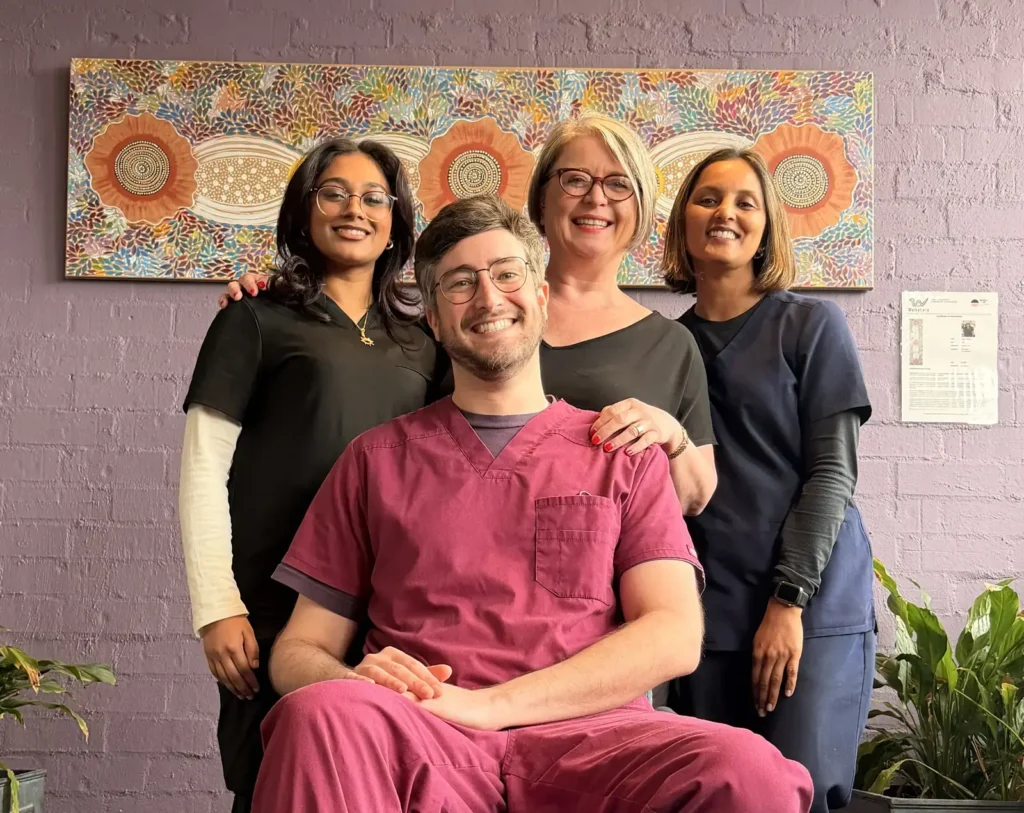
Artwork in our waiting room, from Walkatjara Art

Our services

The best investment you can make to your dental health is a regular checkup and clean. Dentistry does not have to be expensive. Neglect is.

Everyday care

Everyday care

We place a great emphasis on good gum health and are able to provide simple cleans to comprehensive gum treatments.
Fixing and restoring

Fixing and restoring

How do we fix teeth with holes or that have broken down or cracked?

Kids, pregnancy and family

Kids, pregnancy and family

We aim to provide families with a positive experience and a good attitude towards dental health. Good dental health starts from a young age.

Nervous patients

Nervous patients

We understand that people are often anxious or nervous about visiting the dentist. We perform dental procedures in a gentle manner and at your own pace.

Sleep, jaw and sport

Sleep, jaw and sport

We can help you with the management of sleep apnoea and snoring, problems with the jaw joint, and minimising dental trauma from sport.

See all services

Why people choose us

At Burgundy Street Dental Clinic, we believe that everyone deserves a quality smile. Come visit us and ask us how you can achieve a healthy smile without the fuss. Just honest, straightforward advice.

“I believe in providing caring and gentle dentistry in an affordable manner. I am hard working, driven and like to instil a positive attitude towards dentistry for all my patients.”

Dr Susma Pawar, Dentist and owner

A look inside

We are at 124 Burgundy Street, a short stroll from Heidelberg Train Station. Here is what to look for when you arrive.
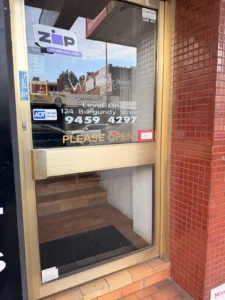
Our entrance on Burgundy Street
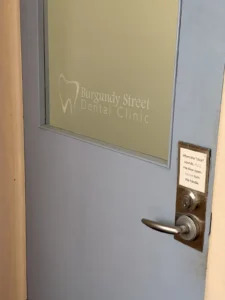
The door to the practice on level one
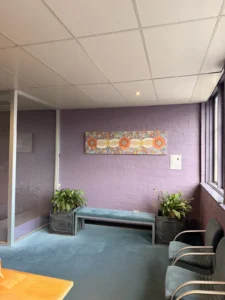
Our waiting room
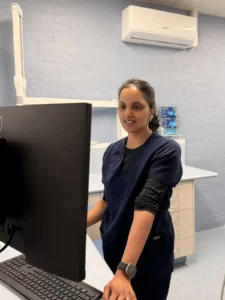
Dr Susma Pawar in the surgery

Our team

Burgundy Street Dental Clinic has been in the heart of Heidelberg for more than 35 years. Started by Dr Cherie Boyall, it is now owned and operated by Dr Susma Pawar.

Our friendly dentist team includes Dr Susma Pawar and Dr Ben Casella. Dentistry is what we are passionate about and we love it.


Burgundy Street Dental - Susma

Dr Susma Pawar

Dentist and owner, BDS (Adel)

I believe in providing caring and gentle dentistry in an affordable manner. I am hard working, driven and like to instil a positive attitude towards dentistry for all my patients.

Dr Ben Casella

Dentist, BDS (JCU)

I am excited to provide patients high quality dental treatment in a gentle and understanding environment. I appreciate that sometimes visiting the dentist can be a daunting experience and take the time to make sure every patient is comfortable in the dental chair.

Specials, health funds and payment plans

Special offers

Promotions and special offers.

Special offers

Health funds and Medicare

We have HealthPoint to claim your rebate on the spot, so you only have to pay the difference, if any, between the invoice total and the rebate amount. HealthPoint accepts claims from most health funds.

We can help you check if your child is eligible for the Medicare Child Dental Benefits Scheme worth $1,158.

Payment plans

We offer payment plans through a third party company. Please contact us to find out more.

Payment plans

Advice and guides

How to

Squeeze a pea-sized amount of toothpaste on to your toothbrush. Brush all smooth surfaces of teeth in circular motions. Use the tips of the tooth brush to clean the back surfaces of the front teeth. Brush carefully where the teeth meet the gums as plaque can accumulate here. Your gums are like the gutter around your teeth. They collect plaque that builds up each day. so it is important that this area is cleaned well.

Also, clean the biting surfaces of the teeth. Ensure that you use a soft tooth brush and do not brush too hard as this can damage gums and teeth, causing wear, sensitivity and the appearance of yellow teeth.

Ensure you brush every morning after breakfast and at night time before bed time.

It is important to brush your child’s teeth to prevent dental decay.

  • You can use a soft cloth to wipe your baby’s gums everyday.
  • Teething rings/gels may be used to soothe an infant’s discomfort during the months of their baby teeth erupting.
  • As your baby gets older, you can introduce a small kid’s toothbrush to clean his/her teeth and gums. Use gently circular motions and toothpaste is not recommended.
  • Flossing your baby’s teeth is important as food can still get trapped between the teeth and cause holes. You can use simple floss or floss on a handle (flossettes). Gently slide the floss between the teeth whilst holding the chin to control any head movements.
  • For a toddler above 2 years of age, use a small smear of childrens’ tooth paste. Children tend to swallow toothpaste so it is important that only a small smear of tooth paste is used.

Children may fuss, cry and scream during this but it is important you persist as tooth decay will result otherwise. This can have an impact on their dental health in the future. Dental decay can result in hospitalisations under general anaesthetic for treatment.

You can try and make brushing fun by implementing a few strategies such as a brushing chart, story telling, playing a song or using a toothbrush with their favourite cartoon character.

  • Get a piece of floss approximately 45cm long.
  • Wrap it around your middle fingers until you 5cm left between them, leaving your index fingers and thumbs free to guide it.
  • Slide the floss carefully between each tooth, using a sawing action if the contact is tight.
  • Curve the floss around each tooth and gently guide it up and down the tooth’s surface and just under the gumline.
  • Do this for every tooth, using a fresh piece of floss for each one by winding and unwinding it from your middle fingers.
  • Don’t forget to floss the backs of the last teeth in your arches.
  • Don’t be alarmed if you notice any bleeding – you haven’t cut your gum. Bleeding is a sign that the gum is unhealthy and it will cease over the coming days as you improve your dental hygiene techniques.

You should floss your teeth once per day.

Worn whilst you sleep, your nightguard protects your teeth from the damage caused by clenching and grinding. It can take a few nights to adapt to wearing it but persevere and in time it will not bother you at all.

It’s important to keep your night guard clean. Always brush your teeth prior to wearing it and clean your night guard after use using a toothbrush and running cold water. It is beneficial to soak your night guard in a denture cleaning solution, such as Polident or Sterident, on a weekly basis.

If your night guard becomes stained you can soak it briefly in a solution of hydrogen peroxide 3% diluted 1:1 with water. Minor adjustments to the fit of your night guard can be made by running it under hot tap water – not boiling – for 15 seconds and placing it in and out of the mouth several times.

If this is not sufficient call your dentist to schedule an appointment for an adjustment.

Store your night guard dry in the plastic case you received with it.

Ensure you keep the night guard out of reach of dogs – many a night guard has met an untimely demise in the jaws of the owner’s pet!

If your night guard becomes damaged or broken your dentist can repair or replace it. Always bring it to your dental appointments so that it can be checked to be fitting correctly after any treatment you have.

Clean your dentures after each meal or at least twice daily. To clean, remove them from your mouth and rinse off any food particles with water. Then, brush all surfaces using a toothbrush and a mild soap such as Velvet soap or a commercially available denture cleaner from your pharmacy or supermarket. It is not recommended to use toothpaste as it may be too abrasive. Do not use hot or boiling water, abrasives, detergents, bleach, methylated spirits or any other strong chemicals. These could damage your denture. It is recommended to remove your dentures when you sleep. This allows your gum tissues to have a rest and also prevents premature wear to your dentures caused by clenching and grinding. After you remove the dentures, clean them well and leave them to sit dry, not soaked in water. Store your dentures in a safe place where they can’t accidentally be knocked, and out of reach of children and pets so they do not get damaged. If you accidentally break your denture it is possible that they may be able to be repaired or, in a worst case scenario, they may need to be replaced. Look after your dentures and they will last for many years.

Caring for your implant is no different to caring for your natural teeth. Brush your teeth after meals. Take your time! Keeping the gums healthy around your implant is essential. Make sure you floss daily. For bigger gaps your dentist may recommend the use of ‘Superfloss’ or an interdental brush. Watch your diet. Do not smoke. Smoking impairs the healing process and increases the risk of your implant failing. Have regular dental check ups for us to monitor the dental implants.

A healthy diet is important for many reasons, but your diet also impacts your teeth. In addition, the health of your teeth and gums affects your general health too. Every time you eat and drink you subject your teeth to an ‘acid attack’. This acid attack softens the enamel and allows the decay of your teeth to begin. The ideal diet reduces the amount of acidic and sugary foods and drinks consumed along with limiting the number of times you subject your teeth to attack. The most tooth-friendly foods are dairy products such as milk, cheese and plain yoghurt along with eggs. All meats, apples and most vegetables are great too. The best thing to drink is tap water. Sugar-free gum is also good to help stimulate the saliva and neutralise acids. Citrus fruits and tomatoes should be consumed in moderation as they are very acidic. Red wine and coffee can stain your teeth. Carbonated, sugary drinks, sports and energy drinks, wine and fruit juice are all highly acidic. The same is true for lollies and dried fruit. Obviously fruit is part of a balanced diet and we all like a treat now-and-then. If you want to have a treat it is best to combine it with a meal, that way your teeth are being exposed to less frequent acid attacks. If you do snack between meals follow it with some tasty cheese or chew some sugarless gum to minimise the damage to your teeth.

Helpful information

Private Health Insurance can be taken out with the provider of your choice to help cover the cost of any medical treatment you receive. If you select additional cover, known as ‘extras’, you will get a rebate on your dental treatment, too. Rebates, and what is covered, vary depending on the provider you choose and the level of cover you take out. It’s your choice whether to take out private insurance or not. Do your homework. Compare providers and make sure you get the cover that’s right for you. We have HealthPoint to claim your rebate on the spot so you only have to pay the difference, if any, between the invoice total and the rebate amount. HealthPoint accepts claims from most health funds.

The healing process after an extraction or oral surgery procedure is important. You may experience bleeding, swelling or discomfort and we want to avoid infection.

The Do’s and the Don’ts:

DON’T exercise vigorously for the first few days

DON’T eat on the site of surgery until comfortable

DON’T smoke or drink alcohol for at least 2 days following the procedure

DON’T use mouth rinse too vigorously as it may encourage excessive bleeding

DO eat as normal a quantity of food as possible. This is especially important if you are diabetic.

DO use cold packs to reduce any swelling

DO take Paracetamol or Nurofen for any pain (if not allergic, and safe to). Other stronger pain relief medication may be prescribed by the dentist. Avoid Aspirin/Disprin if possible for the first 2 days

DO sleep with an extra pillow for the first night following surgery to minimise bleeding in the mouth during the night

DO contact the dentist if after a few days discomfort begins to increase rather than decrease

DO rinse with warm salt water (no swallowing) after each meal to help cleanse the site. Avoid for the first 24 hours after surgery to allow the site to settle

DO clean your teeth as much as is comfortable.

Visiting us

Opening hours

  • Monday 8.30 am – 6.00 pm
  • Tuesday 8.30 am – 6.30 pm
  • Wednesday 9.30 am – 5.00 pm
  • Thursday 8.30 am – 5.00 pm
  • Friday 8.30 am – 1.00 pm
  • Saturday Certain procedures

Saturday only available for certain procedures.

Getting here

1/124 Burgundy St, Heidelberg VIC 3084

We are located in the heart of Heidelberg, right next door to the Heidelberg Newsagency and two doors from Chemist Warehouse, and a very short stroll from Heidelberg Train Station and access to buses. Car parking is available on Cartmell Street and Burgundy Street, with rear entry to the practice too.

Find us

Send us a message

Please feel free to contact us. We promise we don’t bite.


    For anything urgent, please call (03) 9459 4297.

    New patients always welcome. Call us to book your visit.